Oput — A Zero-Commission Delivery & E-Hailing Concept
A business model built on giving riders 100% of the fare and funding the platform with advertising instead
What
Oput is a delivery and e-hailing platform concept with one structural difference from the incumbents it was designed against: it takes no cut of the rider's earnings. The fare is haggled directly between rider and user, in the open, and the platform funds itself through advertising instead.
The name is a Kadazan word meaning to connect.
How
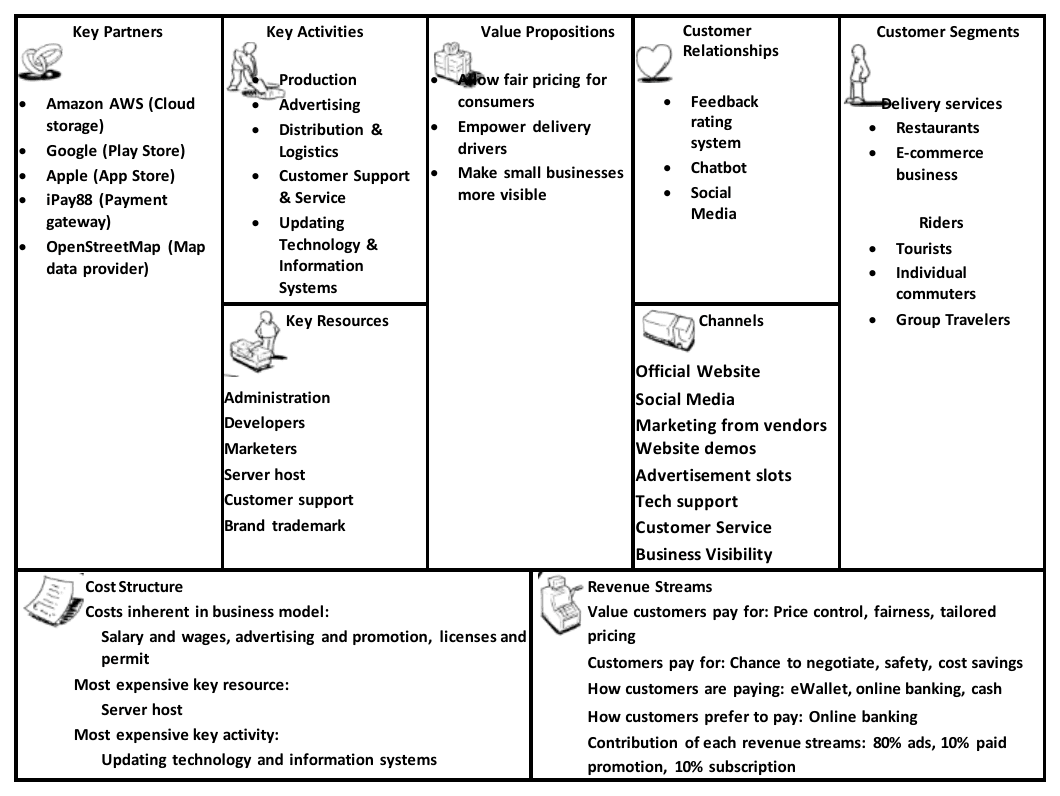
The work was a full feasibility study rather than a pitch. It ran in three parts: a concept statement, a feasibility analysis tested against real respondents, and a Business Model Canvas mapping how the thing would actually hold together.
The pricing mechanism is the idea. Incumbents operate an opaque pricing system and take a percentage from riders. Oput publishes rider fee offerings so that fees are visible to everyone and set by market forces — a rider can price in road and weather conditions, and a user can see what they are paying for. A second service class, walkers, covers short distances and places a vehicle cannot reach.
The distribution idea is local business visibility. Florists, bakeries and gift shops sign up directly. The example the team kept coming back to was the tomu — the open-air markets of Sabah selling traditional products and handicrafts — where each stall could take a spot in the app and a user anywhere could take a "digital stroll" through it.
Revenue was modelled as 80% advertising, 10% paid promotions and 10% user subscriptions to an ad-free tier. The canvas identified the server host as the most expensive key resource and updating the technology and information systems as the most expensive key activity, with key partners spanning small businesses, independent drivers, Amazon AWS, the Google and Apple stores, the iPay88 payment gateway and OpenStreetMap.
Outcome
The concept statement was tested with 8 respondents, of whom 6 judged the idea feasible. The dissenting two pointed at the same risk — that established apps and brand familiarity would drown out a new entrant — which the analysis recorded rather than argued away.
The most useful feedback was not about the pricing at all: respondents wanted the service categories broadened beyond e-hailing, food delivery and shopping into niches like house-cleaning and maintenance, on the reasoning that attracting service providers is as important as attracting customers, and that most platforms only optimise for the second.
It is the project that taught me a business model is a set of dependencies, not a slogan — and that the interesting question is usually which resource is the expensive one.
Gallery
Click any image to enlarge